Traditional Clothing
The Fabric of Yemeni Identity
Explore the diverse tapestry of Yemeni traditional attire, where every thread, color, and fold tells a story of regional heritage, climate adaptation, and ancient trade routes.

Traditional Clothing
Explore the diverse tapestry of Yemeni traditional attire, where every thread, color, and fold tells a story of regional heritage, climate adaptation, and ancient trade routes.
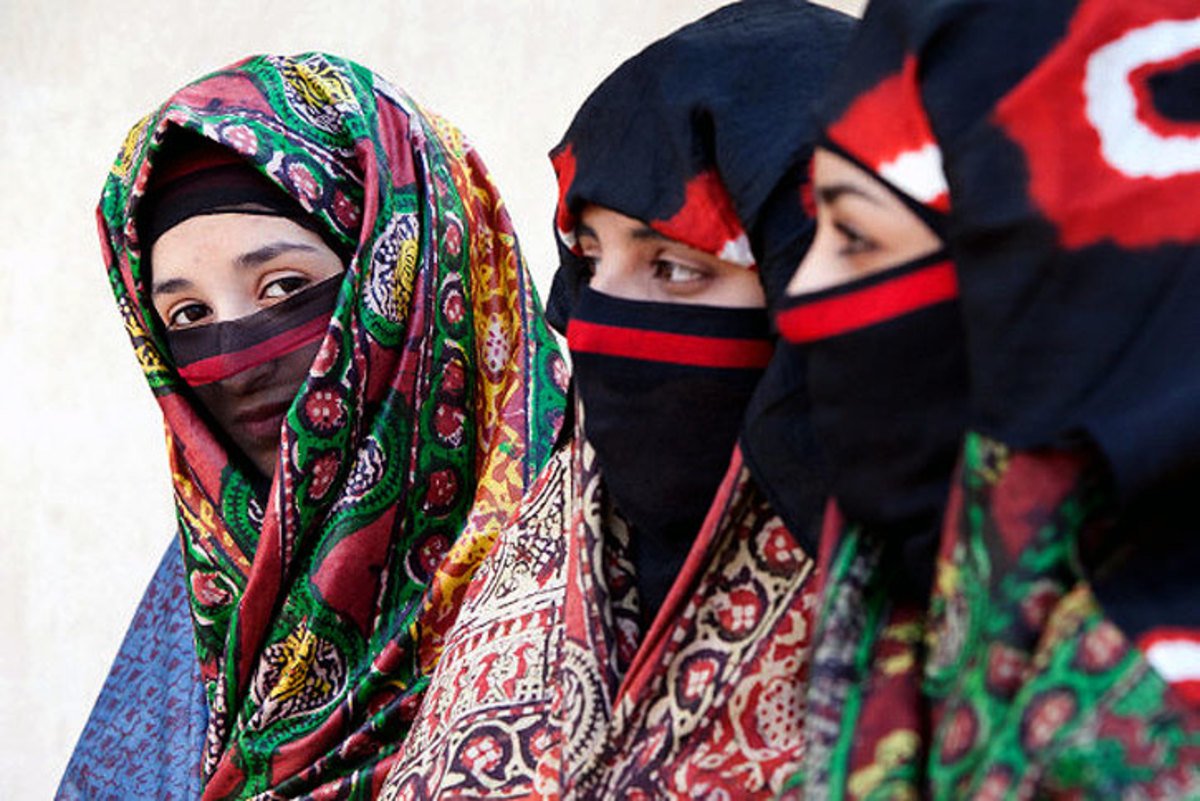
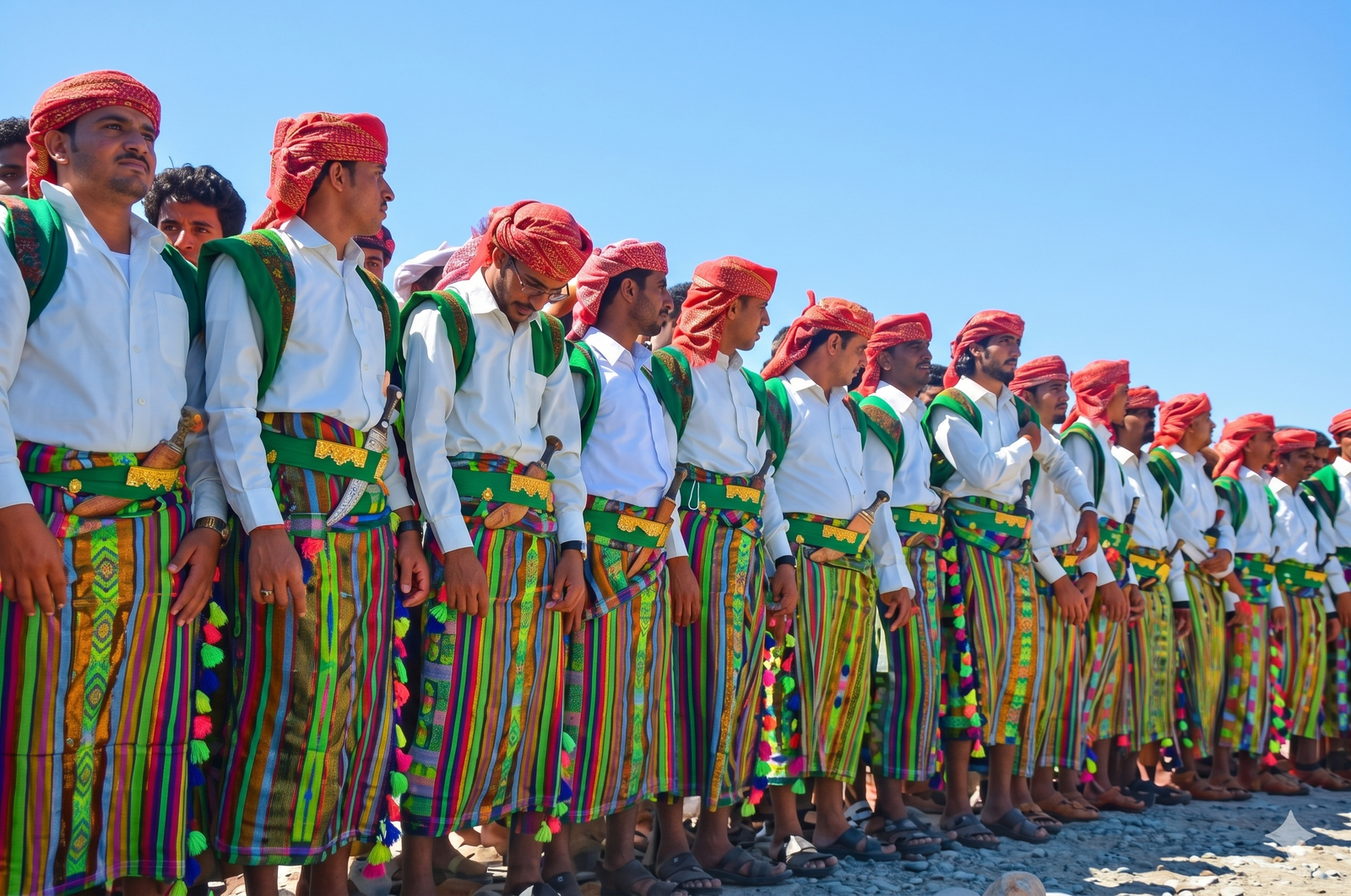
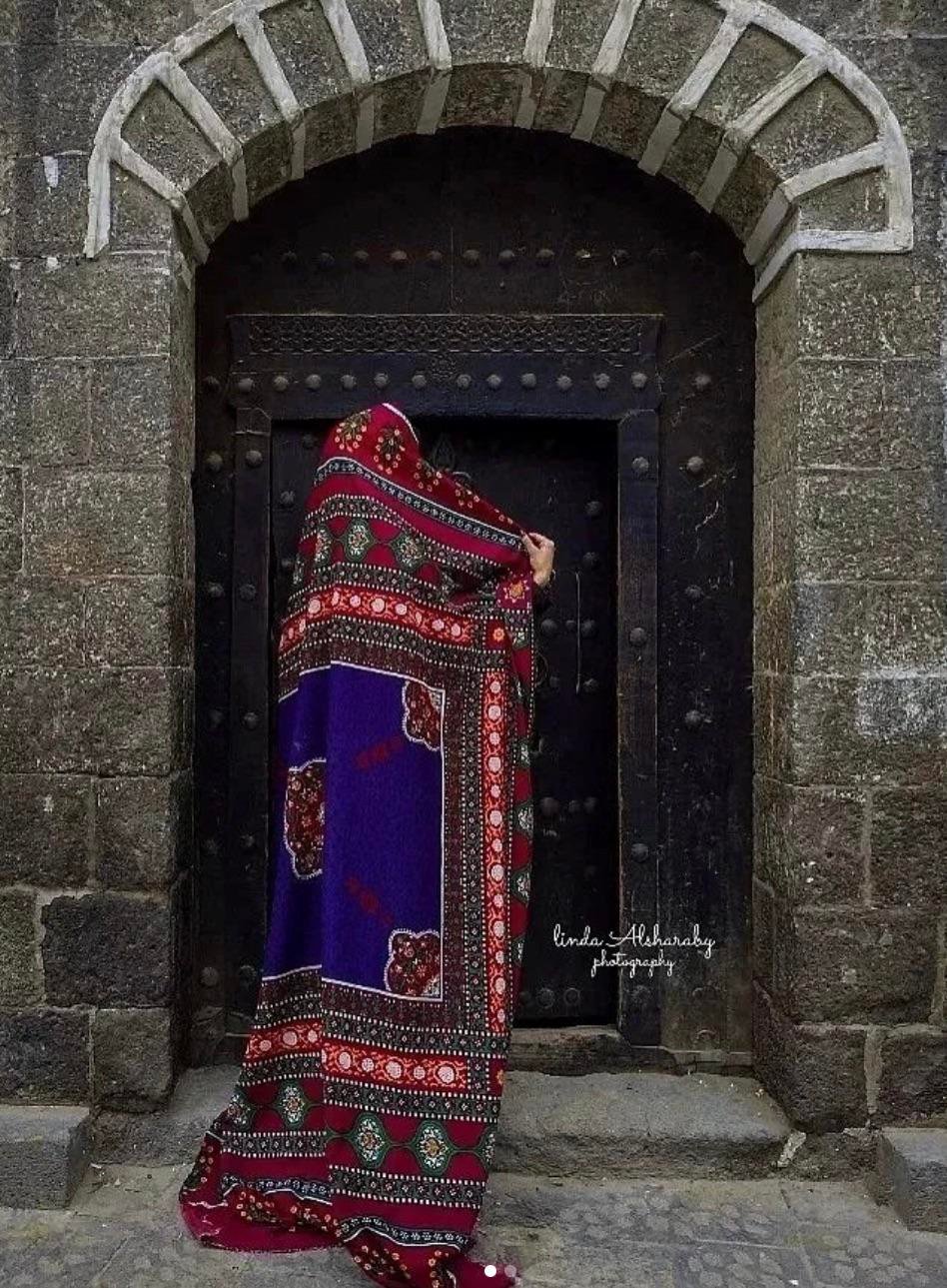
The Sana’ani attire dates back centuries, tracing its lineage to the ancient Sabaean and Himyarite eras, with subtle influences from the Ottoman period. Historically, these garments evolved from the exquisite silks and brocades hand-woven in the ancient quarters of Sana'a and Rawdah. Today, local women step out in the iconic Sitara, a vibrant, square-patterned cotton wrap in red, black, and white that loosely drapes the body, paired with the Maghmog, a delicate silk veil covering the face. For weddings and traditional celebrations like Yom al-Ghasl (the pre-wedding henna night), brides dazzle in the Tashreefa or Sana’ani Dress, crowned by the Qambaa—a majestic tiara encrusted with silver and coral. Meanwhile, men exude timeless elegance in the Zanna (a crisp white tunic) layered under a tailored jacket or Qaftan. The attire is completed with a meticulously folded turban and the Janbiya (the traditional curved dagger), secured by a gold-embroidered Al-Mismar belt.
Sources: The Traditional Arts and Crafts of Yemen – Yemeni Ministry of Culture / Archives of the Sana'ani National Heritage Center.
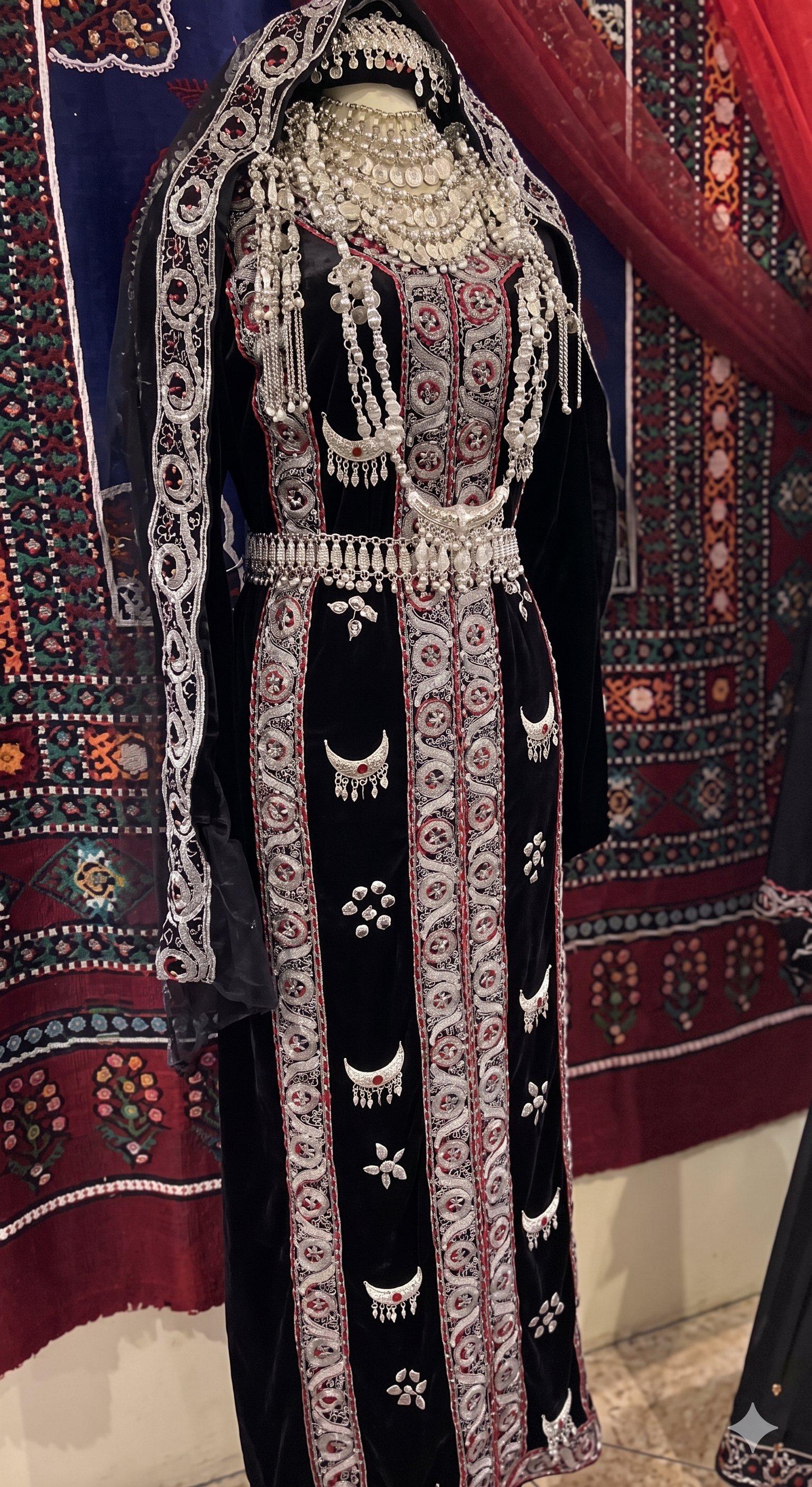
As a historic global port and bustling trading hub, Aden's fashion evolved by seamlessly blending authentic Yemeni roots with Indian and East Asian influences during the 19th and 20th centuries. The hallmark of Adeni women's fashion is the Dir’a, a breezy, free-flowing dress made of sheer chiffon or silk, adorned with vibrant floral prints—perfectly tailored for the city’s coastal heat. It is typically worn over a shorter slip-dress called the Koot. For bridal henna nights, women opt for the Zabj or a luxurious velvet gown known as Al-Qatifah Al-Arayesiyah, richly embroidered with golden threads. For men, the hand-woven Ma’waz (sarong) remains the ultimate symbol of identity, casually paired with a light cotton shirt (Shameez), a traditional Zarbani cap, or a neatly draped shoulder shawl.
Sources: Research Papers by the Aden Center for Historical Studies and Research / The Yemeni Culture Magazine.
The evolution of Hadrami attire is deeply intertwined with the historic seafaring and migration of Hadramis to Southeast Asia. This cross-cultural exchange introduced fine Indian and Javanese silks to the region, replacing older, locally woven fabrics like Al-Makhawi. Along the coast, women favor the flowing Saref or the Shahri Dir’a, while the women of the interior valleys are known for the Kindi Dress, intricately embroidered with shimmering Talli threads. In rural Hadramout, women working in agriculture and herding wear a black veil paired with the Madhallah—a striking, high-topped palm-frond hat that provides shade from the midday sun. Hadrami men are defined by the uniquely patterned Hadrami Ma’waz, worn alongside a simple shirt, a wide shoulder shawl, and a woven cap, an ensemble that takes center stage during weddings, accompanied by exquisite Hadrami silver jewelry.
Sources: Civilization and Heritage in Wadi Hadramout by Dr. Abdul Qader Al-Sabban.
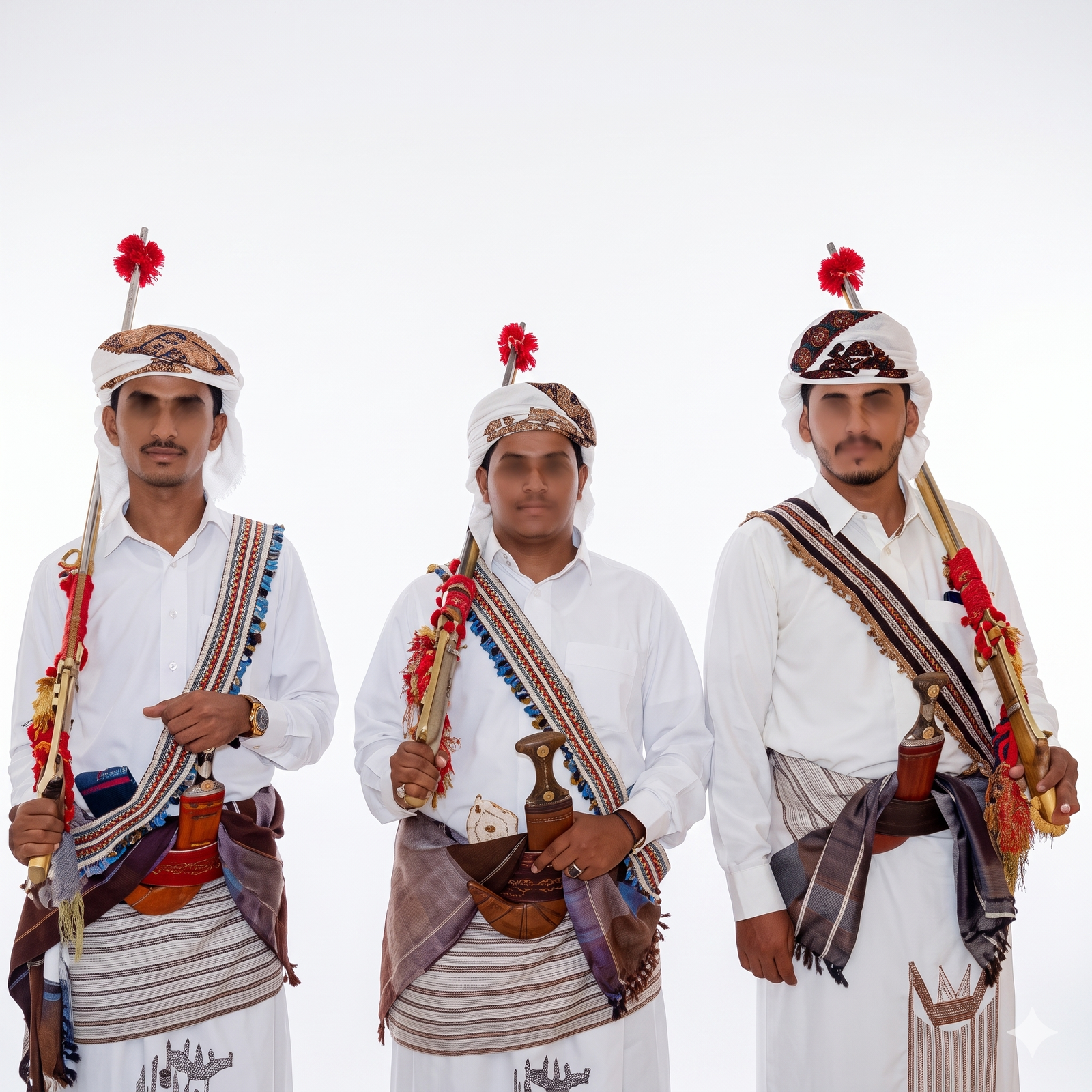
Shabwah's attire remains profoundly anchored in its rugged desert environment and tribal customs. Unaltered by passing trends, these garments have preserved their rugged, authentic Bedouin design, engineered to withstand the harsh desert climate. Shabwani women wear the Thoub Al-Mujazza’, a sweeping black gown featuring bold red and yellow embroidery across the chest and sleeves, paired with a silver-embellished Burqa (face veil). Men wear the Shabwani Ma’waz, traditionally woven in deep shades of green or navy blue, paired with a shirt. They secure their waist with a heavy leather belt (Al-Sabtah) to hold ammunition and the Janbiya, while a sturdy Bedouin turban is wrapped around the head for protection against sandstorms—a proud look most prominently displayed during tribal poetry gatherings (Zamil) and weddings.
Sources: The Encyclopedia of Yemeni Tribes and Customs / Documentaries by the Department of Antiquities and Museums in Shabwah.
The coastal attire of the Tihama region in Al-Hudaydah is a brilliant example of functional fashion, meticulously adapted to intense tropical heat and humidity. Historically made from locally spun cotton, the garments are deeply associated with aromatic plants. Women wear the Tihami Ma’waz (a draped cotton skirt) with a lightweight blouse, shielding themselves with a wide-brimmed palm-leaf hat (Madhallah) and accessorizing with fragrant necklaces woven from jasmine and Kadi blossoms. Similarly, men wear a shortened, lightweight white or striped cotton Ma’waz tailored above the knee to allow freedom of movement for fishing and farming. Men and women alike adorn their hair with the Assabah—a crown of fresh jasmine and aromatic herbs—a daily tradition that turns into an elaborate statement during Tihami weddings and festivals.
Sources: Tihama in History and Culture – Al-Hudaydah University Publications.
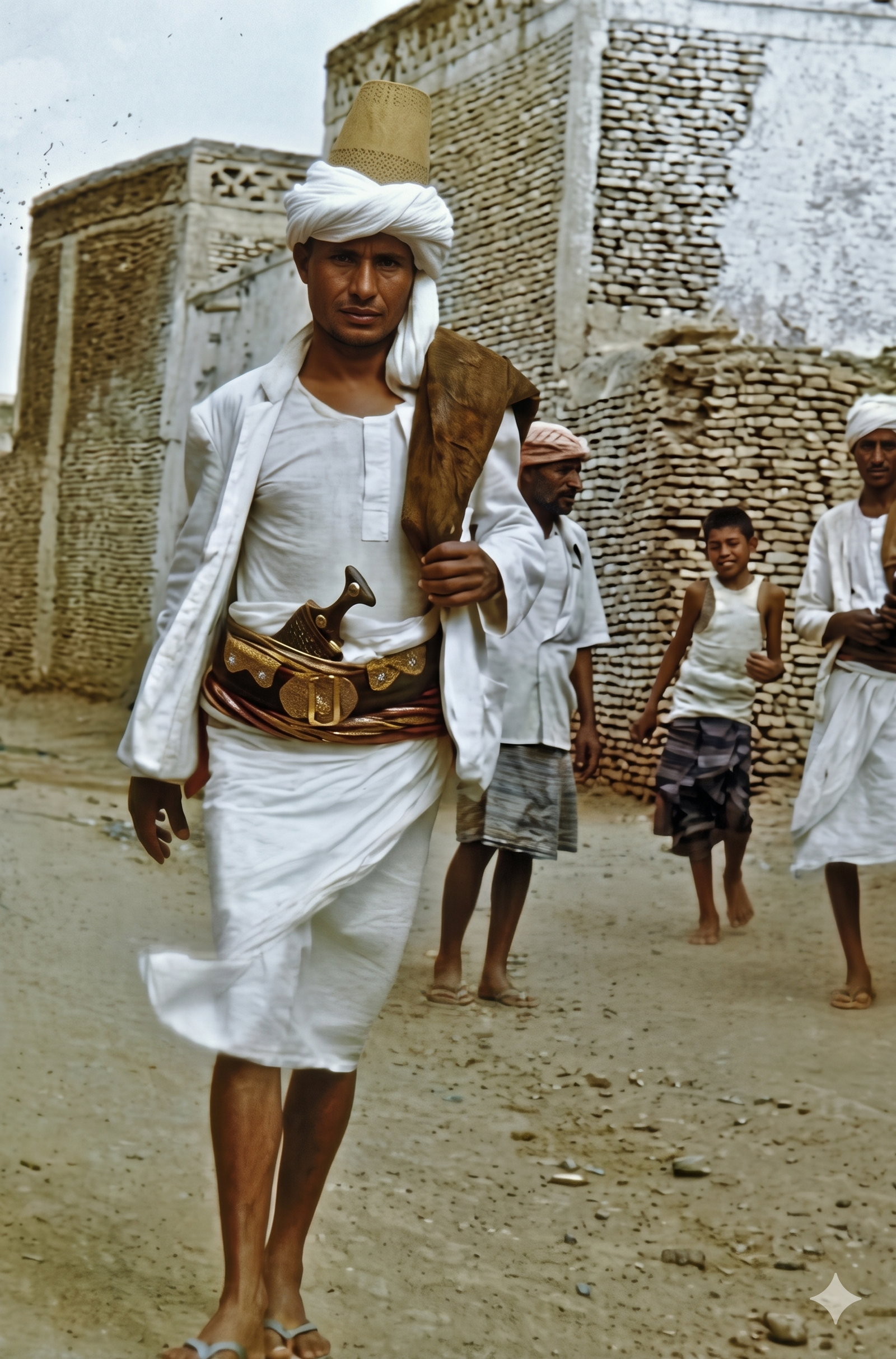
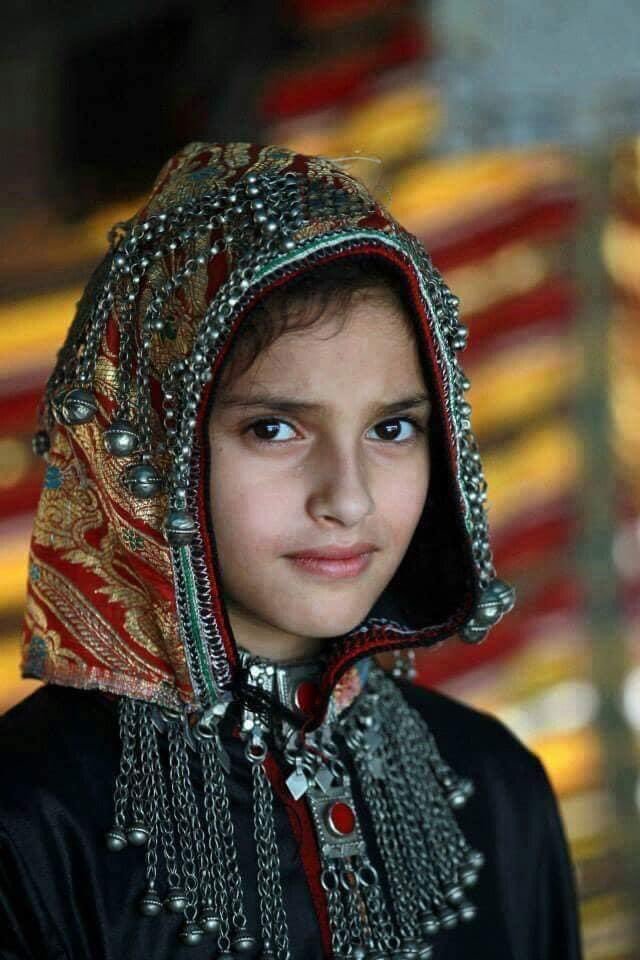
The attire of Taiz, particularly from the mountainous Al-Hujariyah region, was forged by a vibrant agricultural lifestyle. The clothing evolved to strike a perfect balance between rustic elegance and practical freedom of movement for working in the terraced fields. Women proudly wear the Thoub Al-Mahbouk, a beautiful black or colorful dress featuring dense, elaborate velvet embroidery on the chest and sleeves. They complete their look by tucking Mashaqer—highly fragrant sprigs of wild basil and aromatic herbs—behind their ears, releasing a sweet scent as they move. Men wear the classic Taizi Ma’waz with a white shirt and a sleekly crafted Janbiya that reflects the city's refined, civil character. These embroidered outfits and fresh herbs are central to rural celebrations, particularly during Al-Madrahah (the traditional swinging ceremony celebrating the return of Hajj pilgrims).
Sources: The Cultural and Social Aspects of Al-Hujariyah by Ahmed Al-Jabri.
Geographically isolated and culturally distinct, Al-Mahra has fiercely preserved its unique clothing traditions, which share close historical and tribal ties with the Dhofar region of Oman. Mahri women are famous for the breathtaking Thoub Abu Dhail (the tailed dress). This asymmetrical gown is cut short in the front but cascades into an extraordinarily long, dramatic train that sweeps the floor behind it. Crafted from fine velvet or silk, it is heavily embroidered with golden Zaree threads and worn with a petite Mahri Burqa. Mahri men wear the White Izar (a clean white sarong) with a matching shirt or a traditional Arabian Dishdasha, topping it off with a distinctively draped head-cloth and the signature Mahri dagger. This majestic attire is proudly worn during major Eid celebrations and weddings, accompanied by the traditional Haboot dance.
Sources: The Mehri Language Center for Studies and Research / The History of Al-Mahra by Sheikh Salem Bakheet.
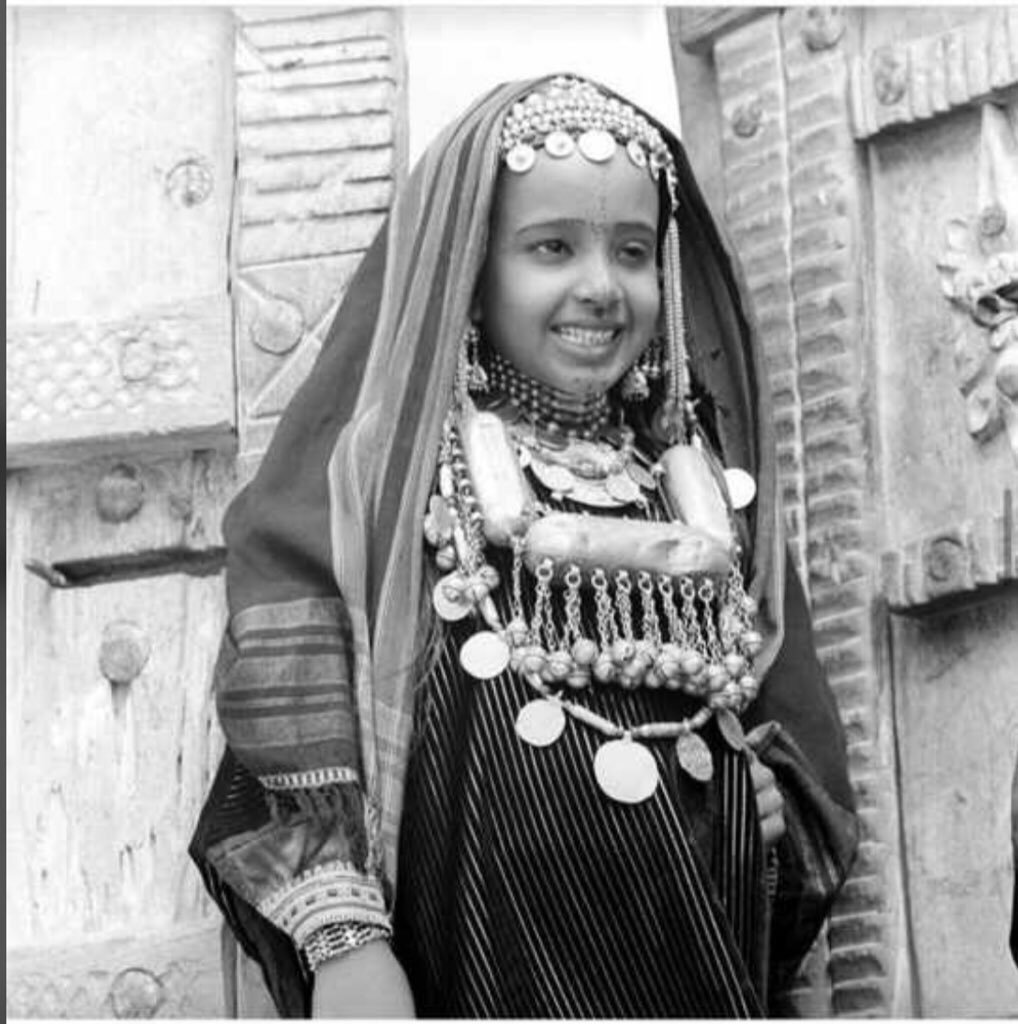
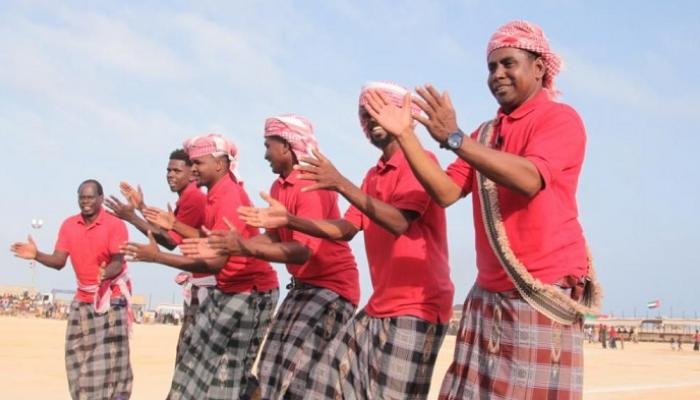
Isolated in the heart of the Indian Ocean, the Socotra archipelago developed an eco-fashion of its own. Historically, the islanders relied on local sheep's wool and native flora—such as the resin of the famous Dragon's Blood Tree—to dye their fabrics, before cotton eventually arrived via passing trade ships. The traditional Socotri women's dress is a masterclass in minimalist comfort: a loose, brightly colored cotton gown worn with a simple headscarf and accessorized with antique silver and coral bead necklaces. Socotri men wear the Shammat or Socotri Ma’waz, a simple, un-patterned or lightly striped sarong paired with a lightweight shirt. A defining trait of the Socotri man is the carrying of the Al-Mihjan (a traditional curved walking stick) and a shawl wrapped around the waist. This authentic island attire shines brightest during the annual Socotra Heritage Festival and island-wide mass weddings.
Sources: Studies by the Socotra Archipelago Heritage Rescue Foundation / Bio-Anthropological Research of Socotra Island.